
My Company

Can Dubai Heat Affect EV Charger Performance?

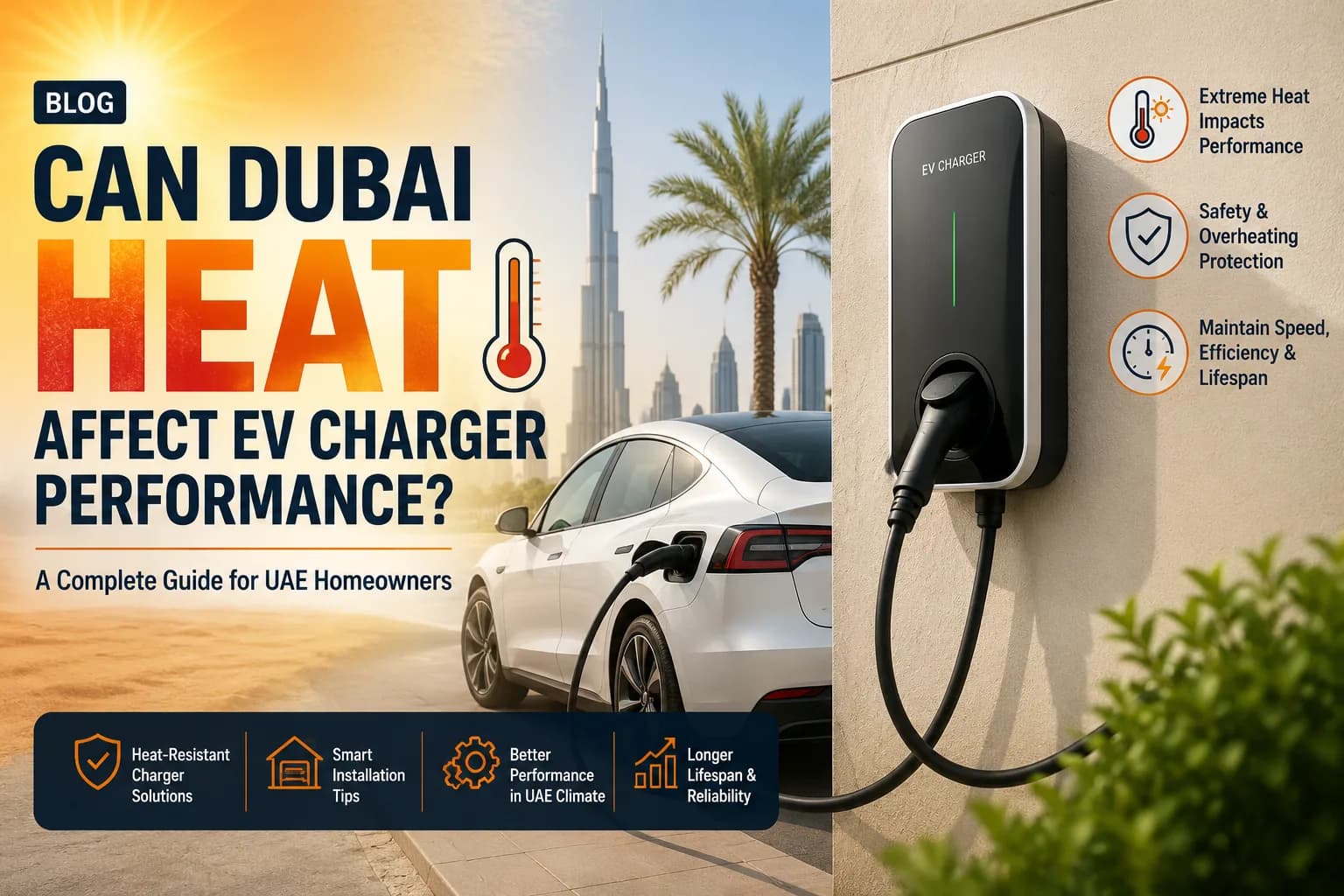
Can Dubai Heat Affect EV Charger Performance? article image


Electric vehicles are becoming increasingly popular across Dubai and the UAE. With rising fuel prices, environmental awareness, and government support for sustainable transportation, more homeowners are investing in EVs and installing chargers at home. However, one important question many people overlook is whether Dubai’s extreme climate can affect EV charger performance.

The short answer is yes. Dubai’s intense heat can directly impact charging efficiency, charging speed, equipment lifespan, and overall system reliability. During summer, temperatures in the UAE can exceed 45°C, especially in outdoor parking areas and exposed villa driveways. Under these conditions, EV chargers operate in an environment far more demanding than what many homeowners realize.

Understanding how heat affects EV charging systems is essential if you want safe, efficient, and long-lasting performance. Choosing the right charger, installation location, and protective solutions can make a major difference in both convenience and long-term cost savings.

Can Dubai heat affect EV charger performance?

Yes, Dubai’s extreme heat can affect EV charger performance by reducing charging efficiency, increasing overheating risk, slowing charging speeds, and shortening the lifespan of charger components if the system is not properly installed or protected.

Why Heat Affects EV Chargers

EV chargers are electrical systems that generate heat naturally during operation. When outdoor temperatures are already extremely high, the charger has to work even harder to maintain safe operating conditions. This becomes especially noticeable in Dubai, where chargers are often installed outdoors and exposed to direct sunlight for long hours.

Most EV chargers include thermal protection systems designed to prevent overheating. When internal temperatures rise beyond safe levels, the charger automatically reduces charging speed or temporarily pauses charging to protect the equipment. While this safety feature is important, it can significantly affect charging performance and convenience for users.

This is why many EV owners notice slower charging speeds during peak summer afternoons, even when the charger appears to be functioning normally.

Direct Sunlight and Outdoor Installations

One of the biggest causes of EV charger overheating in Dubai is direct sun exposure. Many chargers are installed on exterior villa walls, outdoor parking areas, or uncovered garages where they receive constant sunlight throughout the day.

When a charger is exposed to direct heat, the external casing temperature rises quickly. Internal electronic components such as circuit boards, sensors, and power modules are highly sensitive to excessive heat. Over time, repeated exposure can reduce efficiency and accelerate wear and tear.

This is why professional installation plays a critical role in the UAE. Proper positioning, shaded placement, and weather-resistant installation methods are essential for protecting the charger and maintaining stable performance.

Charging Speed Reduction in High Temperatures

Many EV owners assume slower charging always means a technical problem, but heat-related throttling is actually common in hot climates. Modern EV chargers and vehicles are designed to protect themselves when temperatures rise too high.

In Dubai summer conditions, the charger may automatically reduce power output to avoid overheating. As a result:

  • Charging takes longer
  • Performance becomes inconsistent
  • Fast charging may slow significantly

This protection system is normal and helps prevent permanent damage to the charger and vehicle battery. However, poor installation conditions can make the problem much worse.

Dubai Climate Challenges for EV Chargers

Dubai’s climate creates several unique challenges beyond just heat.

Dust and Sand

Fine dust particles can enter charging ports and ventilation areas over time. This may reduce cooling efficiency and affect electrical connections.

Humidity

Coastal humidity in some UAE areas can increase moisture exposure around electrical systems, especially if installations are poorly sealed.

Heat Reflection

Concrete surfaces, walls, and paved driveways reflect additional heat toward the charger, making outdoor temperatures around the unit even higher than the actual air temperature.

Together, these environmental conditions make professional installation and protection essential for long-term reliability.

Signs Your EV Charger Is Affected by Heat

There are several warning signs that may indicate your charger is struggling with high temperatures:

  • Charging speed becomes slower during daytime
  • Charger feels excessively hot to touch
  • Charging pauses unexpectedly
  • Error messages appear frequently
  • Charger shuts down temporarily
  • Inconsistent charging performance

If you notice these issues regularly, the charger may need inspection or environmental improvements.

Best Installation Practices for UAE Homes

Proper installation is one of the most important factors in protecting EV chargers from Dubai heat. A professionally installed charger can perform efficiently for years, even in extreme conditions.

Install in Shaded Areas

The best solution is installing the charger in:

  • Covered parking areas
  • Indoor garages
  • Shaded villa walls

Reducing direct sun exposure immediately improves temperature stability.

Use Heat-Resistant Chargers

Not all chargers are designed for Gulf weather. High-quality EV chargers built for hot climates use:

  • Better internal cooling
  • Heat-resistant materials
  • Stronger electrical protection

Choosing the right equipment is essential for long-term performance.

Professional Cable Management

Messy or exposed cables absorb more heat and may become safety risks over time. Organized installation protects wiring and improves overall appearance.

Electrical Load Assessment

Before installation, the home electrical system should be inspected to ensure:

  • Stable voltage
  • Proper grounding
  • Safe power distribution

This prevents overheating caused by overloaded circuits.

Smart EV Chargers: The Better Solution

Smart EV chargers are becoming increasingly popular in Dubai because they offer better temperature management and energy optimization.

These chargers can:

  • Monitor charging conditions in real time
  • Adjust charging speed automatically
  • Detect overheating early
  • Improve efficiency during hot weather

Some systems even allow scheduling nighttime charging when temperatures are lower, improving performance and reducing energy costs.

Can Heat Shorten EV Charger Lifespan?

Yes. Constant exposure to high temperatures can gradually damage internal components and reduce charger lifespan.

Without proper protection:

  • Plastic materials may degrade faster
  • Internal electronics may weaken
  • Cooling systems become less effective
  • Maintenance and repair costs increase

This is why investing in proper installation from the beginning is far more cost-effective than dealing with repeated issues later.

Why UAE Homeowners Need Professional Installation

Installing an EV charger in Dubai is not just about mounting a device on the wall. The installation must account for:

  • Extreme weather
  • Heat management
  • Electrical safety
  • Outdoor durability

Professional installers understand these environmental factors and design systems accordingly. This ensures safer operation, better efficiency, and longer equipment lifespan.

What is the best place to install an EV charger in Dubai?

The best place to install an EV charger in Dubai is in a shaded or covered area away from direct sunlight, with proper ventilation and professional electrical protection.

Conclusion:

Protect your EV charger from Dubai heat with professional installation and smart charging solutions.

📞 600-566447
🌐 https://technical-24.com

Book your EV charger installation today with Technical-24

Can Dubai Heat Affect EV Charger Performance? | Technical 24 | Technical 24