
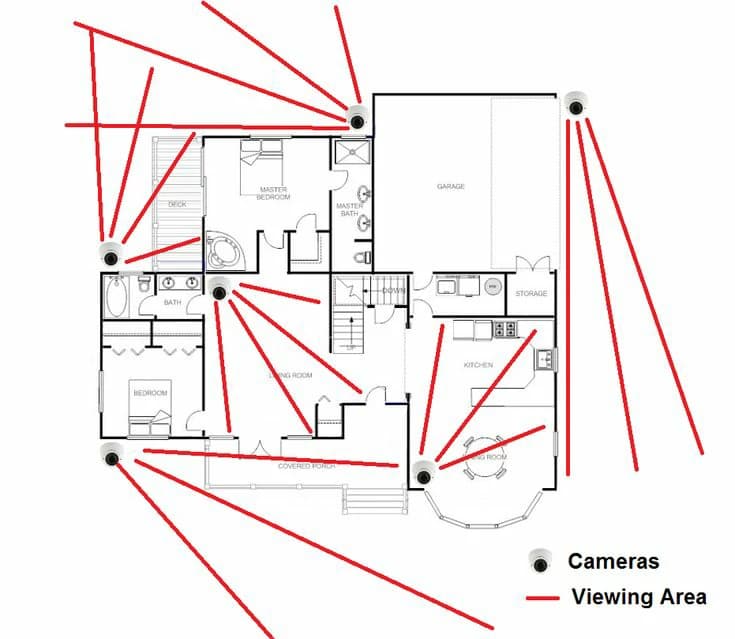
What are the most important places to place surveillance cameras?
Not all homes are the same, but everyone's belongings are worth protecting. CountSurveillance cameras A great tool for achieving a sense of security, as it gives you extra eyes on your property at all times.
Your property layout, budget priorities and home security are different from your neighbor's, so there is no one-size-fits-all rule for placing security cameras. But this guide will help you think through all aspects of your home security setup and decide which ones are absolute musts based on your home's vulnerabilities.
It is also common to place surveillance cameras in workplaces, where cameras are placed to monitor employees and protect the facility
It is also common to place and install surveillance cameras in markets to protect against theft
This guide will help you determine where to place surveillance cameras to achieve maximum protection
Where you should think aboutInstalling home surveillance cameras In all the doors and entrances of the house, as well as the windows and the interior and exterior corners of your house and the places you want to protect
-
Exit: front door
You might assume that intruders always sneak in side entrances, but statistics show that 34% of burglars use the front door. It's also where package thieves are most likely to strike. A camera in your main entryway keeps tabs on everyone coming in and out of your home, from family members and babysitters to maintenance people, delivery people, and more. (Pro tip: Video doorbells are great choices for the front door. You can use them as a primary camera or in conjunction with another outdoor camera pointed at your yard or garage.)
-
Exits: back and side doors
Out of sight doors allow visitors to enter undetected, whether invited or not. Statistics show that 22% of break-ins happen through the back door. To ensure complete knowledge of everyone who enters and exits, add cameras to your secondary doors, especially if one is used more often or more often than your front door, or if one (such as a basement door) seems easy to break into
-
Garage and driveway
Garages are a popular target for thieves because they are one of the weakest entry points. Cameras directed into the garage and/or driveway monitor bicycles, tools, sports equipment, cars and everyone who handles them. If your garage is separated, cameras help you stay connected. If the garage is attached, the extra layer of security monitors another potential entry into your home. If there is a gate at the end of your driveway, you may want to have security cameras there to detect anyone trying to enter.
-
The outer square
A yard monitor will help you keep an eye on anyone looking in your home from outside. It is also useful for capturing the activities of children, animals and intruders.
But in this case, you must be careful not to violate the law. When using surveillance cameras with a wide field of view to photograph the garden of your home, the house opposite you may be photographed, and this is not against the law if the camera overlooks the property from the outside.
However, if you notice any violation of privacy in your home, you must resort to the law. Your neighbor cannot place surveillance cameras in places that overlook your home from the inside.
-
Indoor surveillance cameras: common areas in the home
Placing cameras in assembly points like the kitchen or living room is a great way to see if the kids are doing what they're supposed to do, if the babysitter is paying attention, what pets are getting into, or to check on household help like cleaners and repairmen. Consider prioritizing any rooms with large windows on the ground floor – that way you can see if anyone is tampering with them or using one as a break-in point.
However, it is not permissible to place internal surveillance cameras in locker rooms, bathrooms, or any other places out of respect for privacy
-
Place surveillance cameras inside the lobby or main staircase
You should install surveillance cameras on the main public roads inside your home to make it difficult for someone to move around undetected. If someone or a thief breaks into a bathroom, bedroom, or other unsupervised space, they will still be caught on camera if they move around the house.
Areas where you should not install security cameras
Places that violate your neighbor's privacy: Cameras are great for your safety without compromising the comfort of others, but you need to be aware of the privacy of others in your area.
In general, residential homeowners are allowed to place outdoor security cameras that cover a wide area, and it is usually a good idea to capture your neighbor's property, the street, etc. in the background of your shots. Legally, problems arise if your security cameras capture areas where your neighbors expect privacy (for example, if your security cameras can see into their bedrooms or bathrooms) or if you target neighbors for spying.
Bedrooms, bathrooms and changing areas: Surveillance cameras should never be placed in private spaces that violate privacy. If you want to monitor children or elderly people in your home it is understandable. However, some areas have a justified expectation of privacy. Additionally, if you use wireless security cameras, you run the risk of a hacker using a camera that can access your private spaces. Fortunately, there are plenty of alternatives to cameras. Baby monitors are smart options to place in very young children's rooms. As part of a connected home security system, motion detectors and glass break sensors can be added to doors and windows. Personal medical alert systems are solid options for seniors
Optimize the placement of cameras for function and visibility
When using security surveillance cameras, you must precisely determine the locations that must be monitored. You also need to develop a strategy for how to place surveillance cameras in the appropriate places to cover the intended areas and determine the type and number of cameras needed.
Instructions for placing outdoor security cameras
- Install security cameras 8-10 feet off the ground. This height is low enough to capture fine details but high enough for the camera to be out of reach of thieves and vandals.
- Do not point cameras directly at the sun. Bright light causes glare and high contrast in security camera footage, making it difficult to tell what's happening. Take into account the movement of the sun and the angle of your cameras to indirect light.
- Select whether you want the camera to be visible or hidden. Visual surveillance cameras are effective burglary deterrents, but they are also targets for theft and vandalism. Some users choose to install fake cameras prominently and back them up with a more discreet real camera, while others add heavy-duty hardware or casing around the cameras to make camera damage more difficult.
- Protect surveillance cameras from the elements. The best outdoor cameras have plenty of weather and water resistance, but not all cameras are created equal. Choose cameras rated appropriately for your climate